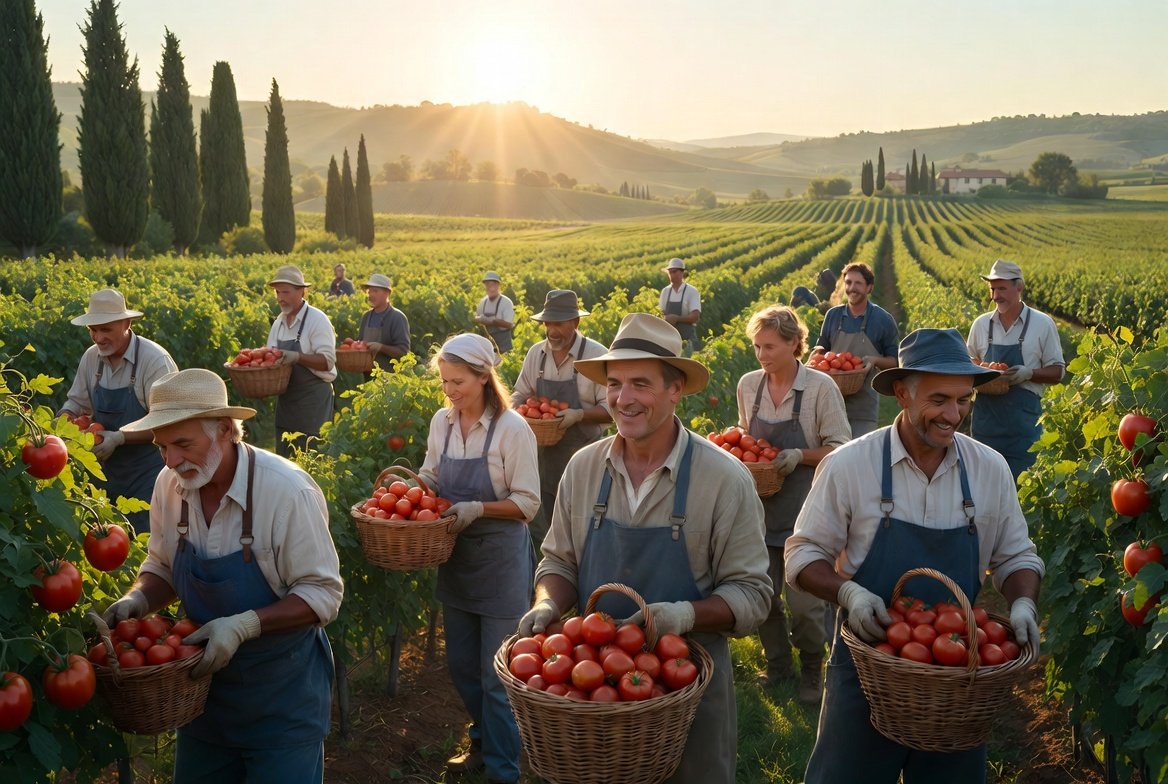
Italy’s agricultural sector remains one of Europe’s most dynamic, producing world-famous wines, olive oil, fruits, vegetables, and cheeses. In 2026, the Italian government has significantly expanded seasonal work quotas under the Decreto Flussi programme, creating thousands of opportunities for non-EU citizens to work on farms across the country. These seasonal farm worker roles offer a genuine chance to experience Italian rural life, earn a stable income, and potentially return in future seasons. This comprehensive guide covers demand, duties, requirements, salaries, visa procedures, and application tips for 2026.
Strong Demand for Seasonal Farm Workers in 2026
Italy faces persistent labour shortages in agriculture due to an aging local workforce and strong export demand. The 2026 Decreto Flussi provides around 88,000 seasonal work places (with extra top-ups), of which a large portion is allocated to agriculture — over 40,000 dedicated farm worker permits in the initial allocation, plus additional slots released mid-year.
Popular regions include:
- Piedmont, Tuscany, and Veneto — for grape harvesting (vendemmia)
- Puglia, Calabria, and Sicily — for olive harvesting
- Emilia-Romagna and Campania — for tomato, fruit, and vegetable picking
- Northern provinces for dairy and greenhouse work
Jobs are typically available from spring through autumn, with peak seasons in summer and early autumn. Many employers, including cooperatives linked to Coldiretti and Confagricoltura, actively recruit internationally.
Typical Duties and Daily Life
Farm work in Italy is hands-on and physically active. Common responsibilities include:
- Harvesting fruits, vegetables, grapes, or olives by hand or with basic tools
- Planting, pruning, weeding, and maintaining crops in fields or greenhouses
- Sorting, packing, and preparing produce for market
- Operating simple machinery or assisting with irrigation systems
- Basic farm maintenance and animal care (in mixed farms)
- Following strict hygiene and food safety standards (especially for export products)
Shifts are usually 6–8 hours per day, 5–6 days a week, with early starts during harvest periods. Accommodation is often provided on or near the farm — sometimes shared dormitory-style — along with meals or meal allowances. The work is seasonal (typically 3–9 months) and tied to specific crop cycles.
Qualifications and Requirements
Most farm worker positions have accessible entry requirements:
- Age: Usually 18–55 years old
- Physical fitness: Ability to perform manual labour in varying weather conditions
- Experience: Previous farm or agricultural work is an advantage but not always mandatory
- Language: Basic Italian or English helps, though many teams are multilingual
- Other: Clean criminal record, good health, and willingness to work flexible hours
No advanced qualifications or degrees are required. Employers value reliability, a positive attitude, and the ability to work as part of a team.
Salary and Benefits in 2026
Salaries follow Italy’s national collective agreements (CCNL) for agriculture:
- Monthly earnings: €800 – €1,400 (depending on region, hours, and productivity)
- Hourly rate: Approximately €7 – €10+
- Higher pay during peak harvest periods or for skilled tasks (e.g., grape picking in premium vineyards)
Common benefits:
- Free or low-cost accommodation
- Meals or food subsidies
- Transportation to the workplace
- Overtime pay and weekend supplements
- Health coverage during the contract period
While earnings are modest compared to some Northern European countries, low living costs in rural areas and provided accommodation make these roles financially viable for many workers.
Italy Seasonal Farm Worker Visa Process (Decreto Flussi 2026)
Non-EU citizens need a Seasonal Work Visa (Tipo D) under the Decreto Flussi quota system. The process is employer-driven:
- Job Offer: Secure a contract from a registered Italian employer or cooperative.
- Nulla Osta Application: The employer submits the request online via the Sportello Unico per l’Immigrazione (usually during “Click Days” — agriculture applications opened in January 2026).
- Visa Application: Once approved, apply at the Italian consulate/embassy in your home country with the Nulla Osta, contract, passport, health insurance, and other documents.
- Entry & Residence Permit: Enter Italy, then apply for the seasonal residence permit within 8 days at the local Prefettura.
The visa is typically valid for the duration of the contract (up to 9 months) and can often be renewed or allow re-entry in future years. Processing times vary but can take several weeks after the Click Day.
How to Find and Apply for Jobs
- Job Sources: Check websites of major farmers’ associations (Coldiretti, Confagricoltura), EURES, Indeed Italy, or Facebook groups focused on seasonal work in Italy.
- Direct Contact: Reach out to farms and cooperatives in target regions.
- Recruitment Agencies: Some authorised agencies help match workers with employers.
- Application Tips: Prepare a simple CV highlighting any agricultural or manual labour experience. Be ready for video interviews. Apply early as quotas fill quickly.
Important: Beware of unofficial agents charging high fees — the official process does not require intermediaries.
Challenges and Important Considerations
Farm work can be physically demanding, with long hours in hot or wet conditions. Cultural adjustment and language barriers may arise initially. However, many workers enjoy the community atmosphere, Italian cuisine, and beautiful countryside settings.
Seasonal visas are non-pathway to permanent residency in most cases, but good performance can lead to repeated contracts or other opportunities in Italy.
Practical Tips for Success in 2026
- Start your job search well in advance (late 2025 or early 2026).
- Learn basic Italian greetings and farming vocabulary.
- Prepare documents early (passport validity, police certificate, medical check).
- Budget for initial travel and any visa fees.
- Network with previous seasonal workers for realistic expectations.
- Stay updated via official Italian government portals (interno.gov.it or esteri.it).
Conclusion
Italy Farm Worker visa opportunities in 2026 provide an accessible and rewarding entry into European seasonal employment. With expanded quotas, supportive employers, and the chance to immerse yourself in one of the world’s most beautiful agricultural landscapes, these roles suit hardworking individuals seeking new experiences and steady income.
Whether you dream of harvesting grapes in Tuscany or olives in Puglia, thorough preparation and persistence can help you secure a position. This guide offers general information based on 2026 policies — always verify the latest details on official Italian government websites and consult authorised sources before applying.